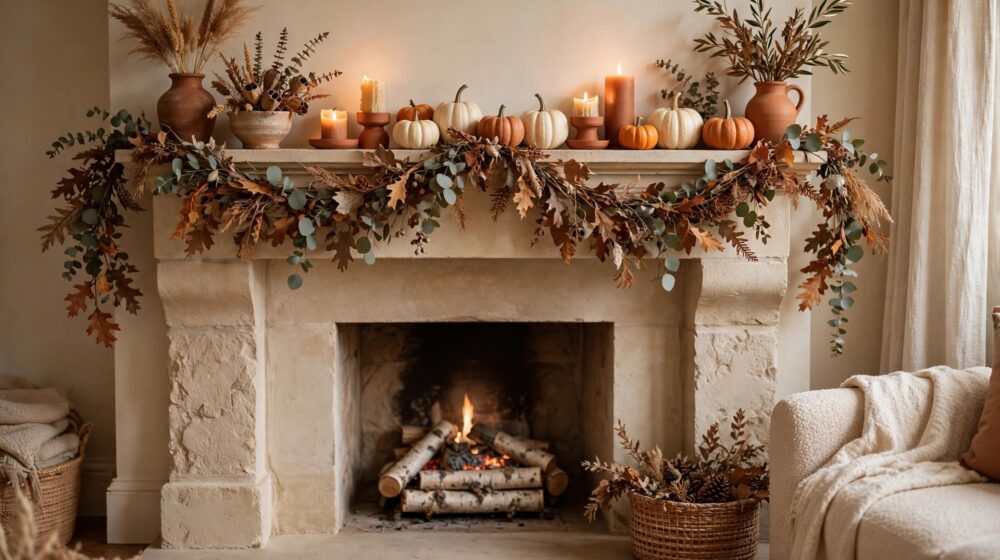
Autumn decor has a way of getting out of hand. One pumpkin becomes twelve, the garland multiplies, and by mid-October the living room looks like a harvest festival exploded. The season deserves better. Autumn is warm, slow, and golden, and the decor should feel that way too.
The rule for seasonal decorating is simple: three places, three touches each. Pick the mantel, the dining table, and the entryway. Style those three places well, and leave the rest of the house alone.
Start with color, not objects
Autumn is a color palette before it is a collection of objects. Terracotta, warm gold, deep rust, and cream will make a room feel autumnal before a single pumpkin appears.
Swap the summer cushions for two in warm tones. Change the throw blanket to a heavier knit in rust or mustard. Put a warm-toned candle on the coffee table. These three swaps cost little, take ten minutes, and do more than a dozen seasonal objects.
If you buy one thing for autumn, buy a throw blanket in a warm color. It works in the living room, the bedroom, and the reading nook, and it stays useful long after the season ends.
Style the mantel in layers
The mantel is the natural home for seasonal decor, and it works best in layers. Start with a garland or a long branch of dried eucalyptus along the top. Add height at the ends with candlesticks or tall vases, and keep the middle low so the mirror or art above it still shows.
Then add three small pumpkins, not twelve. Odd numbers look natural, and three in different sizes reads as styled rather than stocked. Mix real and faux if you like. Real pumpkins last a few weeks indoors; faux ones last for years and cost less over time.
Step back and look. If the mantel feels full, it is done. The most common autumn mistake is adding one more thing to a mantel that was finished three items ago.
Keep the dining table simple
A seasonal table setting should survive an actual meal. That means low, simple, and out of the way.
A wooden board down the center of the table, a row of small candles, and a few sprigs of dried leaves or eucalyptus is enough. It looks considered, it does not block conversation, and nobody has to move it to eat.
Placemats in a warm linen or woven texture add the seasonal feeling without any themed objects at all. If the table looks good with just placemats and candles, it is done. Do not add a themed centerpiece on top of a table that already works.
The entryway sets the tone
The entryway is the first thing you see when you come home, and the first thing guests see. One seasonal touch here does more than five in the living room.
A small wreath on the door, a doormat in a warm tone, or a basket of dried stems by the entrance is enough. If you have a console table, one pumpkin and one candle on it is plenty. The entryway should say welcome, not warehouse.
What to skip
Some autumn decor is more work than it is worth:
- Fake leaves scattered everywhere. They look festive for a day and then migrate into every corner of the house for months.
- Scented everything. One candle is lovely. A candle, a plug-in, and a simmer pot together give the house a headache.
- Seasonal items in every room. The bathroom does not need a pumpkin. The bedroom does not need a garland. Three places, well done, beat twelve places half done.
Store it right, or do not buy it
Before you buy seasonal decor, check where it will live for the other ten months of the year. If the answer is a box you already own with space in it, buy it. If the answer is a new box in an already full closet, skip it.
Store autumn decor in one labeled box, with the fragile items wrapped and the candles kept cool. When next autumn comes, open the box and you have a complete set ready to go. The best seasonal decor is the set you already own.
A note on sources
These ideas reflect widely published seasonal decorating guidance. Candle safety matters: never leave a lit candle unattended, keep candles away from dried leaves and garlands, and keep them out of reach of children and pets.