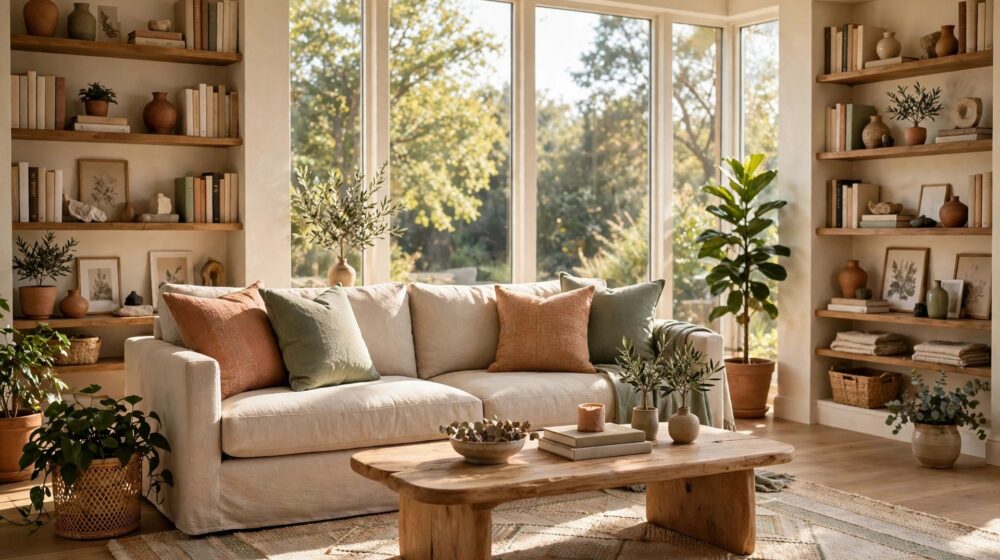
A small living room can feel calm and generous, or it can feel like a storage unit with a sofa in it. The difference is rarely square footage. It is the decisions you make about light, scale, and layout.
None of these ideas requires knocking down a wall or buying new furniture. They work with the room you already have, and most of them cost little or nothing.
Start with the layout, not the shopping
Before you buy anything, try moving what you own. Push the sofa against the longest wall, not floating in the middle of the room. Pull chairs in so conversation feels close instead of scattered. Leave at least 75 cm of clear walking space on the main path through the room.
A common mistake is pushing every piece of furniture flat against the walls, which leaves a dead empty middle and makes the room feel like a waiting area. Pull the sofa a few centimetres off the wall instead. The shadow line behind it tricks the eye into reading more depth.
Try the layout for a full day before you decide. Sit in every seat, walk the paths you actually use, and notice where you bump into things.
Let the light do the work
Light is the cheapest way to make a room feel bigger, and it matters more than paint color. Keep window treatments simple: sheer curtains or light linen panels hung high and wide, so the full window shows even when the curtains are closed.
If your room has one small window, add a large mirror on the wall opposite it. The mirror bounces daylight across the room and effectively doubles the window. Choose one big mirror over several small ones. A single large mirror reads as architecture; a cluster of small mirrors reads as clutter.
Avoid heavy lampshades and dark corners. A floor lamp in the darkest corner of the room lifts the whole space, and it costs far less than a new sofa.
Choose furniture that shows its legs
Bulky furniture that sits flat on the floor reads as a solid block and eats visual space. Furniture with slim, visible legs lets you see the floor underneath, and the eye reads that as extra room.
This applies to sofas, armchairs, coffee tables, and media units. A low, leggy sofa in a light fabric will make the same room feel larger than a tall, boxy one in dark leather. The same goes for a glass or open-frame coffee table versus a solid wooden chest.
If you are buying new, measure first and tape the footprint on the floor with painter's tape. Live with the outline for a day. A sofa that is 10 cm too long is the difference between a room that flows and a room you have to sidestep.
Use one color story, not five
A small room with five competing colors feels busy and smaller than it is. A room with one calm color story feels bigger, even with the same furniture.
Pick a base neutral you like, warm white, soft greige, or pale sage, and use it on the largest surfaces: walls, rug, and sofa. Then add two accents at most, for example terracotta and warm wood, repeated in cushions, throws, and art. Repetition is what makes the palette feel intentional instead of random.
This does not mean the room has to be beige. A deep green accent wall can make a small room feel cozy and intentional, as long as the rest of the palette stays quiet. The rule is contrast with discipline, not no contrast at all.
Go vertical with storage and art
When floor space is limited, the walls are your extra square footage. Tall, narrow shelving draws the eye upward and makes the ceiling feel higher. Hang curtains from just below the ceiling rather than just above the window frame, for the same reason.
Art works the same way. One large piece of art makes a stronger statement than six small frames scattered across a wall, and it takes less visual effort to read. If you love a gallery wall, keep it to one wall and one tight arrangement. Our gallery wall guide walks through spacing that actually works.
Keep the rug big enough
A rug that is too small is the most common living room mistake, and it shrinks the room instantly. The front legs of the sofa and chairs should sit on the rug, not outside it. As a rule of thumb, leave 15 to 20 cm of bare floor between the rug edge and the wall.
A light rug with a subtle pattern opens the room up. A dark, busy rug anchors it down. If you already own a rug that is too small, layer it over a larger, plain jute or flatweave rug. The layering looks intentional and fixes the scale problem for the price of one plain rug.
Edit ruthlessly, then stop
Small rooms punish clutter more than big ones do. Walk into your living room with fresh eyes and remove three things. Not three things you hate, three things you barely notice. The tray you never use, the extra cushion, the stack of magazines from last year.
Put them in a box for a week. If you do not miss them, they were decoration debt, not decoration. The room will feel bigger, and you will have spent nothing.
The goal is not a minimal showroom. It is a room where everything in it earns its place. That is what makes a small living room feel generous: not more space, but fewer distractions from the space you have.
A note on sources
These ideas reflect widely published interior design guidance on scale, light, and layout, plus the furniture care and measurement advice manufacturers publish for their own products. Room dimensions and light conditions vary, so treat the measurements here as starting points and adjust them to your own room.